
Neck Pain: Why It Happens, What Helps, and When to Get It Checked ✅

Physical Therapy & Wellness by Design | Clarksburg, MD
⚠️ Disclaimer
This content is for educational purposes only and is not intended as medical advice. It does not establish a provider–patient relationship. Please consult with a licensed healthcare professional before starting any exercise program or making healthcare decisions, especially if pain, injury, or medical conditions are present.
🧠 What Neck Pain Usually Means
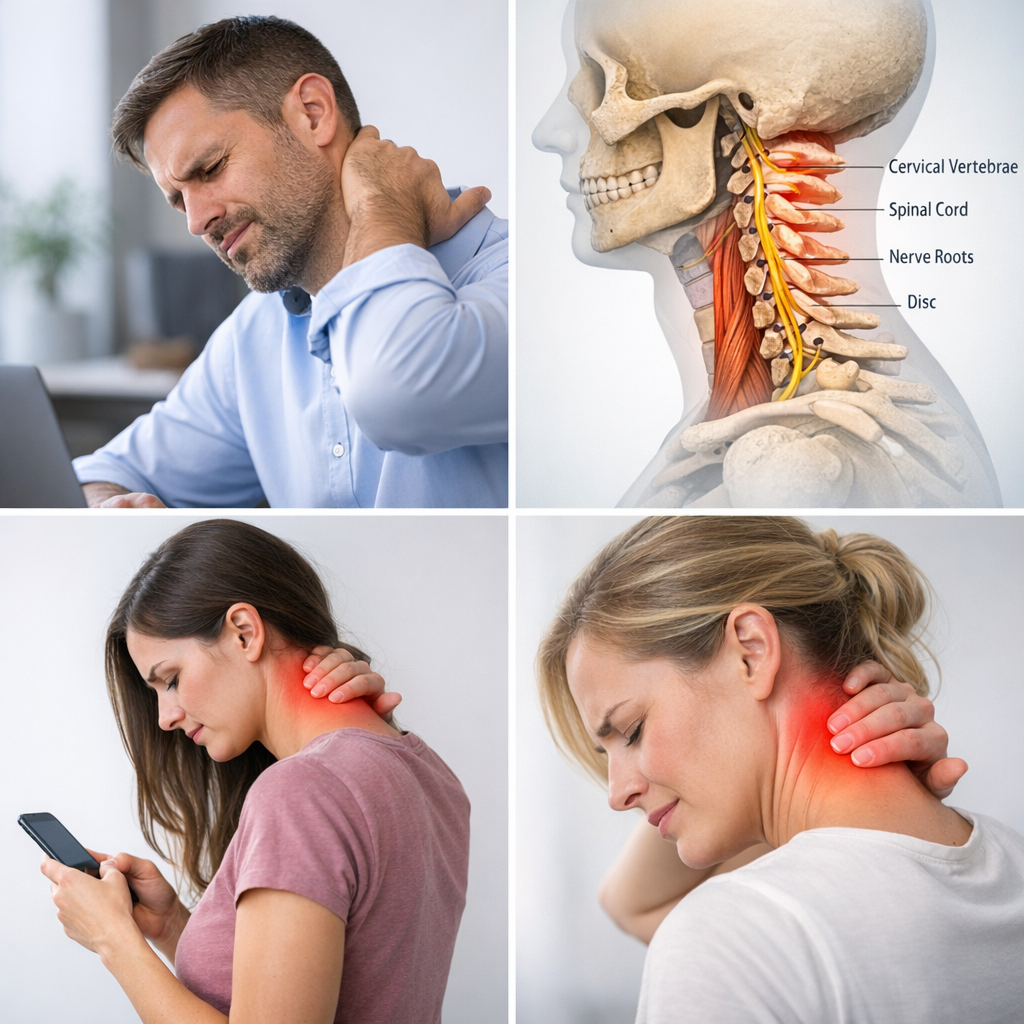
Neck pain is a common concern and is often associated with muscle tension, joint stiffness, postural strain, or repetitive loading. In many cases, symptoms develop gradually rather than from a single injury.
Some common contributing factors may include, but are not limited to:
💻 Prolonged desk or computer work
📱 Repeated looking down at phones or tablets (“tech neck”)
🧳 Carrying bags on one shoulder
😴 Sleeping positions or pillow support that do not adequately support the neck
🏋️ Sudden increases in physical activity or lifting demands
🚗 Extended driving or commuting
🦴 Understanding the Neck (Cervical Spine)
The neck—also known as the cervical spine—is designed to provide both mobility and stability. It supports the weight of the head and works closely with the upper back, shoulders, and nervous system.
Structures that may contribute to neck symptoms include:
🧩 Joints, which may become stiff with prolonged or repetitive positions
💪 Muscles, including the upper trapezius, levator scapulae, and deep neck muscles
🧠 Nerves, which may be involved when symptoms extend into the shoulder or arm
🧱 Upper back and shoulder blades, which can influence how much stress the neck experiences
👉 Important: Neck symptoms are often influenced by multiple regions, not the neck alone.
🚩 Symptoms That Warrant Professional Evaluation

Consider seeking evaluation from a licensed healthcare professional if you experience:
⚡ Pain radiating into the arm with numbness or tingling
💪 New or progressive weakness
🌪️ Dizziness, imbalance, or visual changes associated with neck movement
🤕 Severe, persistent, or unusual headaches
🚗 Symptoms following a fall, accident, or trauma
🌡️ Fever, unexplained weight loss, or night sweats
⏳ Pain that continues to worsen or does not improve over 48 hours
🔥 A Common Neck Discomfort Pattern
Some individuals report:
🧱 Tightness across the upper shoulders or stiffness in the neck
🎯 Discomfort near the base of the skull or top of the shoulder
🔄 Symptoms that increase with prolonged sitting, computer use, or driving
😌 Temporary symptom changes with movement that return after sustained positions
This presentation is commonly associated with postural stress and movement habits, though individual experiences may vary.
🛠️ General Strategies That May Be Helpful
Some people may find symptom relief by incorporating general movement and posture awareness into daily routines, such as:
⏱️ Taking brief movement breaks every 30–45 minutes
🖥️ Positioning screens closer to eye level
🪑 Sitting with appropriate back and arm support
🧊 or 🔥 Using ice or heat based on individual comfort
🚶 Engaging in light, regular movement
Responses to these strategies differ between individuals.
🧘 Exercises You Can Try
The following exercises are commonly used in physical therapy settings and are provided for general educational purposes only. Perform slowly and within a comfortable range. Discontinue if symptoms worsen.
Chin Tucks

⏱️ 30 seconds × 4
Sit tall with shoulders relaxed
Gently glide your chin straight back
Keep your eyes level (do not look down)
✅ Upper Trapezius Stretch

⏱️ 30 seconds × 4, both sides
Sit tall and hold the chair seat with one hand
Gently tilt your head away from that side
Add light pressure only if comfortable
✅ Levator Scapula Stretch

⏱️ 30 seconds × 4, both sides
Sit upright with shoulders relaxed
Rotate your head about 45° away from the side being stretched
Now gently pull your head towards your arm pit and add gentle pressure only if comfortable (no side bending)
Breathe slowly
🧩 A Physical Therapy Perspective
Physical therapy for neck-related symptoms typically involves:
✔️ Individualized evaluation of movement, posture, and contributing factors
✔️ Addressing joint and muscle mobility as appropriate
✔️ Improving strength, coordination, and movement control
✔️ Education on activity modification and self-management strategies
Maryland Direct Access Note
Under Maryland law, individuals may access physical therapy services without a physician referral, within the scope permitted by state regulations. A physical therapist will determine whether physical therapy services are appropriate or if referral to another healthcare provider is recommended.
At Physical Therapy & Wellness by Design, care is based on professional evaluation, clinical judgment, and patient-specific needs.
📍 When to Consider Scheduling an Evaluation
If neck symptoms are persistent, recurring, or interfering with daily activities, an evaluation with a licensed physical therapist may help clarify appropriate next steps.
🟦 Physical Therapy & Wellness by Design
📍 Clarksburg, MD
📞 240-901-4980
👉 Schedule / Contact
✍️ Author
Dr. Vardhan K. Mudigonda, PT, DPT
Doctor of Physical Therapy
Physical Therapy & Wellness by Design (PTWD) – Clarksburg, MD
Physical Therapist providing one-on-one, movement-based care for athletes and active adults. Restore-Recover and Rebuild
⚠️ Disclaimer
This content is for educational purposes only and is not intended as medical advice. It does not establish a provider–patient relationship. Please consult with a licensed healthcare professional before starting any exercise program or making healthcare decisions, especially if pain, injury, or medical conditions are present.